
South Asian Festival Guide: Spring in Bhutan & Nepal
Spring in Bhutan and Nepal is bright and lively, filled with color, music, and age-old traditions. As the cold mountain air warms up, rhododendrons paint the mountainsides in red and pink. The valleys come alive with celebrations. From the thoughtful Bhutanese mask dances to the joyful festival of colors in Nepal, you will feel the festive spirit around every corner.
This guide shows you some of the most breathtaking spring festivals in both countries, making your trip both culturally enriching and visually stunning. These festivals are not just shows; they represent the community’s history and faith. For visitors, they offer a rare chance to see traditions passed down through generations. Attending these events is more than just watching; it’s about joining a shared cultural experience, feeling the energy of the crowd, and discovering stories that shape these unique societies.
Whether you love adventure, enjoy taking photos, or are looking for something more meaningful in life, the Spring Festivals of Bhutan and Nepal promise an unforgettable experience.
Why Spring Is Peak Season for South Asian Festival Celebrations
Spring in the Himalayas is a time when nature comes alive. After a quiet winter, the land bursts with sounds and activities. The weather is wonderful—it’s cool and crisp, the landscapes are blooming, the skies are clear, and the temperatures are mild. This is the best time for outdoor celebrations. Spring lasts from March to May, with temperatures neither too cold nor too warm, and it’s not interrupted by the monsoon.
For thousands of years, agricultural villages have aligned their major celebrations with nature’s cycles. For many, spring marks the end of the harvest season and the start of planting new crops. It’s a season of hope and togetherness before the hard work of the upcoming months. This is why several important religious and cultural events, such as New Year’s celebrations, take place during this time.
As a visitor, spring is the best time to come. You’ll enjoy great weather and lively cultural events. You can have a comfortable experience while trekking and sightseeing, and you’ll also join in the region’s most vibrant and colorful customs.
Top South Asian Festival Events in Bhutan & Nepal
While there are many local festivals throughout the year, three significant events stand out for their size, cultural significance, and visual appeal.
Paro Tshechu, Bhutan: A Dance of the Divine
- Location: Paro, Bhutan
- Timing: Spring, usually in March or April (dates change each year according to the Bhutanese lunar calendar)
In the beautiful Paro Valley, the impressive Rinpung Dzong comes alive during the Paro Tshechu, one of Bhutan’s largest and most important religious festivals. This sacred event spans several days and attracts thousands of Bhutanese from across the country, all dressed in their finest traditional clothing. The festival is a time for people to purify themselves from sin and gain virtue.
The highlight of the festival is cham, or sacred mask dance. Both monks and laypeople perform these dances, which are not just entertainment; they are choreographed rituals that tell historical stories and celebrate the rise of Buddhism. Each dance features detailed costumes made of embroidered silk and intricate wooden masks representing deities, demons, and animals. Watching the dancers sway to the sounds of cymbals, drums, and horns offers a glimpse into Bhutanese spirituality.
The festival concludes before dawn on the last day with the unveiling of a large embroidered painting, or thangka, known as Guru Rinpoche. Many believe that simply seeing this sacred artwork can free someone from sin and guide them toward eternal life. The thongdrel is displayed as part of the main celebrations for just a few hours before it is carefully rolled up and stored away until the following year. Being there during this time can be a once-in-a-lifetime experience. The quiet respect from the crowd as this moment unfolds is truly awe-inspiring in such a unique country. For official festival schedules and travel guidelines, visit the Bhutan Tourism website before planning your south asian festival trip.

Holi, Nepal: A Joyful Explosion of Color
- Location: Celebrated throughout Nepal, with major festivities in Kathmandu and Pokhara.
- Timing: Spring, usually in March (date corresponds to the Hindu calendar).
Holi is one of the most exciting festivals in Nepal. It marks the arrival of spring and celebrates the victory of good over evil. More importantly, it’s a day filled with joy. On Holi, social barriers disappear—everyone, regardless of age, class, or background, joins in the fun.
During Holi, streets and squares fill with vibrant colors. People throw colored powder (gulal) and spray water (pichkaris) at friends, family, and even strangers. The air is filled with shouts of “Happy Holi!” as clouds of red, blue, green, and yellow powder swirl through the air. The excitement is heightened by music, dancing, and the shared joy of life. Wearing white helps show off the bright colors, making each participant part of the colorful display.
While Holi is celebrated across Nepal, the celebrations in Durbar Square and Thamel, both in Kathmandu, are especially lively. In recent years, live music and food stalls have added more energy to this centuries-old tradition. It’s a day to let loose, enjoy the chaos, and celebrate life in all its colors. You can check updated cultural event listings and travel information on the Nepal Tourism Board website.

Bisket Jatra, Nepal: The Chariot Battle of the New Year
- Location: Bhaktapur, Nepal
- Timing: Mid-April, during the Nepali New Year.
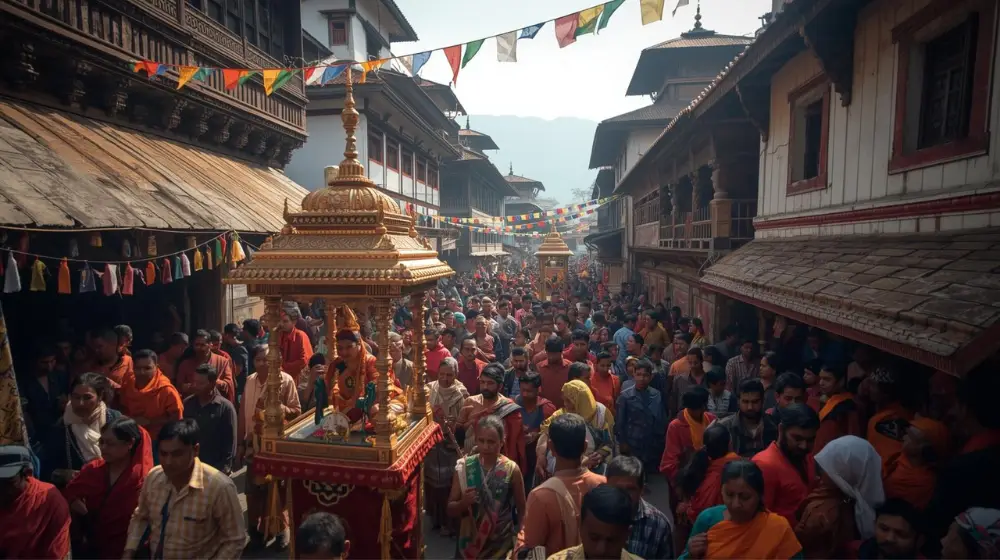
Bisket Jatra is a festival filled with excitement and local traditions. This nine-day event welcomes the Nepali New Year and shows community spirit and faith. The highlight is a tug-of-war between two teams from different sides of Bhaktapur. They pull a large, three-story chariot carrying the deity Bhairab through the narrow streets.
Pulling the chariot is chaotic. The giant wooden wheels creak as hundreds of men pull it, chanting all the while. The team that manages to pull a member of the opposing team is said to have good luck for the coming year.
Another key part of Bisket Jatra is raising a large lingam in a prominent square. The next day, in a reenactment of an ancient myth, the pole is pulled down, symbolizing a divine marriage and the start of a year-long union. This festival features intricate rituals and local beliefs, providing insight into the culture of the Newar community indigenous to the Kathmandu Valley. The energy, spirituality, and ancient rituals make it a captivating event to witness.
How to Attend Festivals with Respect and Awareness
Attending these festivals is an exceptional experience, so it’s important to honor the local culture and participants.
- Dress Modestly: Cover your knees and shoulders, especially during religious festivals like Paro Tshechu. While the dress code is more relaxed on other occasions, long sleeves might be required in dzongs and monasteries. Wear clothes that you won’t mind getting stained, since Holi powders can be hard to wash out.
- Ask Before Photographing: Always ask permission before taking close-up pictures of people, especially during religious ceremonies. Be aware of your presence, but don’t intrude. Flash photography is usually not allowed during rituals and can be disrespectful.
- Follow Local Cues: Pay attention to what local people do and follow their lead. If they are seated, you should sit too. If a place feels crowded, find another area.
- Be Aware of Your Surroundings: Festivals like Bisket Jatra can get very crowded and chaotic. Stay aware of your environment to keep yourself and your belongings safe, and be careful to avoid getting caught in a crowd rush.
Capturing the Moment: Photography & Street Experiences
For photographers, street festivals offer great opportunities for capture. Here are some tips to help you take the best photos and enjoy the atmosphere:
- Best Photo Spots:
- Paro Tshechu: Arrive early for a good spot in the dzong’s courtyard. Higher levels usually provide a better view of the dances. For the thongdrel ceremony, stand close to a wall where it will be unrolled.
- Holi: Durbar Square in Kathmandu and Thamel are filled with color. Explore side streets for closer, more spontaneous photos.
- Bisket Jatra: Stand safely on the sidelines of the chariot route in Bhaktapur. The squares where the chariot stops are great for capturing the crowd size.
- Beyond the Main Event: Don’t focus only on the significant festival events. The streets outside are lively and full of life. Take pictures of families in festive clothing, vendors selling snacks, and children playing. These moments often tell a deeper story.
- Engage with Locals: A simple smile or greeting can make a big difference. Connecting with local people will improve your experience and help you find more natural photo opportunities.
Planning Your Trip: Flight and Hotel Tips
Festival season is also the busiest tourist season. It requires careful planning for a smooth experience.
- Book in Advance:Flights and hotels fill up quickly, especially in Paro for Tshechu and Bhaktapur for Bisket Jatra. I recommend booking 6-8 months in advance to secure your spot and pricing.
- Travel to Bhutan: All visits to Bhutan happen through a pre-planned itinerary set by an authorized travel agency. They will handle your visa, lodging, guide, and daily rate. Make sure to tell them you want to see Paro Tshechu when you book.
- Travel to Nepal: Traveling in Nepal is easier for independent travelers. You can book flights to Kathmandu (KTM) directly. For Holi and Bisket Jatra, choose accommodations within walking distance of the festival activities to avoid traffic, but far enough away to escape the noise when needed.
Frequently Asked Questions (FAQs)
Q: What is the best time to see Paro Tshechu?
A: The dates for Paro Tshechu change each year because they follow the Bhutanese lunar calendar. Typically, it happens in March or April. It’s best to check the official dates from the Tourism Council of Bhutan beforehand.
Q: What should I wear for Holi?
A: Wear old, comfortable clothes that you won’t mind getting stained. White clothes are a great choice because the colored powders stand out, making for great photos. Don’t forget to wear sunglasses to protect your eyes.
Q: Is Bisket Jatra dangerous?
A: The chariot-pulling at Bisket Jatra can be very crowded and energetic. While it is an exciting event, you should be careful. Keep your distance from wild animals, as they have the right of way. Follow your guide’s or local authorities’ advice to avoid any injuries.
Q: How early should I book flights and hotels for these festivals?
A: Book your flights and hotels at least a couple of months in advance. Ideally, try to book 6 to 8 months ahead. These festivals are popular, and accommodations fill up quickly, with prices increasing closer to the date.
Q: Are there specific photography guidelines during these festivals?
A: Yes, you should take photos respectfully. Always ask for permission before taking close-up pictures of people. During the religious festivals and mask dances at Paro Tshechu, do not use a flash, as it can be disruptive. Focus on enjoying the experience more than just getting great photos.
Your Himalayan Festival Adventure Awaits
The spring festivals in Bhutan and Nepal showcase vibrant culture, faith, and community. They offer a chance to experience rich traditions with a lively spirit. From the unique mask dances of Paro Tshechu to the exciting celebration of Holi and the intense action of Bisket Jatra, each festival provides an unforgettable experience in the heart of Nepal’s Himalayas. When you book your trip, remember: you’re not just planning a holiday; you’re getting a front-row seat to some of the world’s most amazing cultural events.


